
What capabilities are truly required for a genuinely usable enterprise-grade agent?
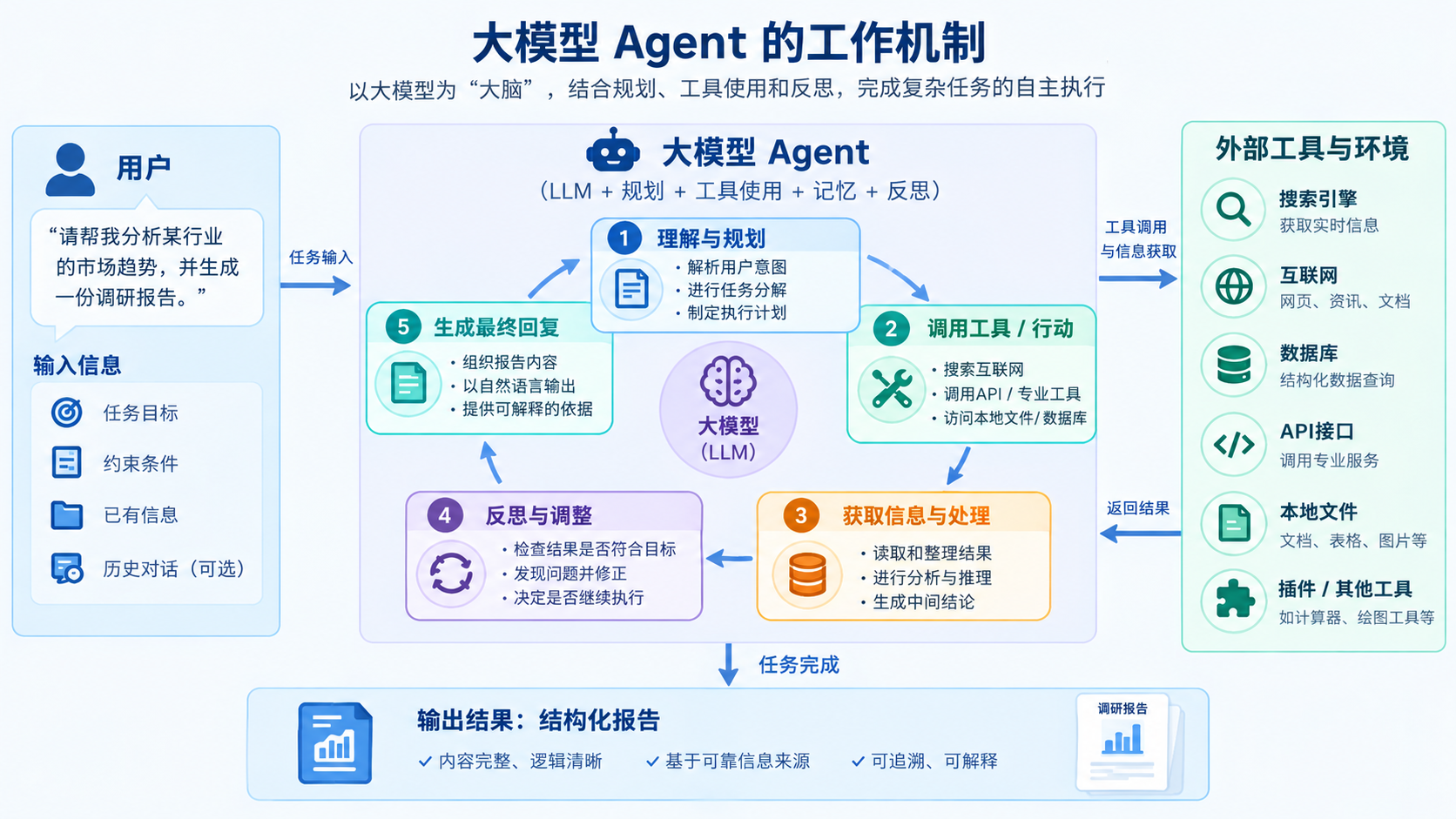
The core value of an enterprise-grade agent platform is turning AI from something that “gives answers” into something that “does the work for you.” Through six capabilities—knowledge base, tool calling, memory, workflow orchestration, multi-agent collaboration, and governance mechanisms—it truly connects large models to enterprise business processes. When selecting a platform, what matters most is not the model version, but whether data can stay within your own domain, whether operations can be traced step by step, and whether anyone will continuously operate it after launch.
Let me start with a scenario I personally encountered. A few years ago, I helped a manufacturing company automate document review. The first phase produced a “Q&A box”: finance colleagues would type a question, and it would answer. Two weeks after launch, usage dropped to single digits. Later, I sat in their finance office for an afternoon and found the problem was absurdly simple—nobody wanted to ask questions. Everyone just wanted to hand off the work they had on their plate.
Take a travel expense reimbursement form. The judgments they need to make are: whose form is this, what level is this person, where did they go, which standard applies, which item exceeds the limit, by how much, should it be returned or should someone co-sign. This involves policy retrieval, document recognition, system data queries, rule comparison, and finally the routing question of “who has approval authority.” A Q&A box can only answer the middle part; the remaining actions still have to be completed by a human.
This is the real dividing line between a chatbot and an Agent: the former gives you answers, the latter does the work for you.
This article is written for managers without a technical background. It does not discuss model parameters—it only addresses one thing: what capabilities an agent needs to truly enter business processes and do work, what engineering problems these capabilities correspond to, and how an enterprise-grade agent platform like AgentSteamer builds each one of them.
One-Minute Overview
- The difference between a large model Agent and a chatbot is not intelligence, but deliverable: a chatbot gives you a block of text, an Agent gives you a result that has already been pushed to completion.
- An Agent that can truly do work consists of six things: a large model, instructions, a knowledge base, tools, memory, and a governance mechanism that can keep it under control. The gap between enterprises usually lies in the latter items, not the model itself.
- The three things most easily overlooked when selecting an enterprise platform: whether data can stay within your own domain, whether operations can be traced to every step, and whether anyone will continuously operate it after launch.
- AgentSteamer is an enterprise-grade AI Agent platform developed by Shanghai Immersivalley Information Technology Co., Ltd. It supports fully private deployment and is not bound to any specific large model—it is compatible with any OpenAI-compatible endpoint, and its built-in Embedding and rerank models are MIT-licensed open-source models, available for commercial use.
1. Taking Apart an Agent: Five Components Plus a Safety Net
Many introductions make Agents sound mysterious, but the analogy of hiring someone makes it very clear.
Suppose you want to hire a new person to handle business for you. This person is smart and learns quickly, but has just joined and knows nothing about your company. To make them truly capable of doing the work, you need to equip them with five things:
The first is a brain. This is the large model itself, responsible for understanding language, reasoning, and generating judgments. It is the engine of the Agent.
The second is a job description. What this role should do, what it should not do, and under what circumstances it should stop and ask for instructions—all of this must be clearly written. Technically, this corresponds to the prompt and instruction system. With the same brain, different job descriptions can produce completely different work.
The third is reference materials. Company policy documents, product manuals, historical cases, customer files. If you do not provide materials, they can only rely on common sense—and common sense is often the least reliable thing on the business front line.
The fourth is operational permissions and tools. A brain alone cannot get things done. They need to be able to log into ERP to check inventory, open OA to submit processes, and call APIs to retrieve data. Technically, this corresponds to tool-calling capability, and the standard protocol in the industry is called MCP.
The fifth is memory. They need to remember who you are, what was assigned last time, and how far this matter had progressed as of last week. Without memory, every conversation is the first day on the job.
There is one more thing that is easily overlooked: someone is watching them, and if something goes wrong, it can be traced back to who made them do it. This is called governance. When a new hire makes a mistake, the worst case is losing some money; when an Agent that can automatically call financial systems makes a mistake, the consequences are hard to estimate.
Among these, the first is the most easily overestimated. Over the past two years, almost all attention has been on models, with stronger versions emerging every few months. But my practical experience from doing projects is: what determines whether an enterprise agent can truly be put to use has never been which version of the model is used, but whether the latter items are built solidly.
While We’re at It: How It Differs from Chatbots and RPA
I have been asked these two questions no fewer than dozens of times in meetings, and they are worth explaining clearly.
The difference from a chatbot has already been mentioned: one gives answers, the other finishes the work. The way to judge is simple—look at what it ultimately delivers to you: a block of text, or a result that has already been executed and landed (a completed form, a process advanced to the next stage, a downloadable file).
The difference from RPA is more subtle and more worth discussing. RPA was the main force in automation a few years ago, and its principle is to simulate human clicks and input on the interface. Its advantage is extremely high determinism—the same operation repeated ten thousand times produces the same result. The cost is extreme fragility—if the system interface changes the position of a button, the process may break; moreover, it only recognizes rules, and gets stuck when it encounters situations not covered by the rules.
The trade-offs of an Agent are exactly the opposite: it can understand vague requests like “help me find the payment terms in this contract,” and it still works even if the interface changes—but because of this, it naturally carries uncertainty: ask the same question twice, and the wording may differ.
So these two are actually not substitutes for each other. Deterministic parts go to RPA and fixed processes, parts requiring understanding go to the Agent, and workflows connect them in between—this is currently the more reliable combination.
2. Six Hard Requirements for Agents in Enterprise Scenarios
The above is a general breakdown. When applied to an enterprise environment, the requirements for each of these components become higher.
1. It Must Speak the Enterprise’s Own Language (Knowledge Base and RAG)
According to public reports from multiple industry research institutions, the most common obstacle enterprises encounter when implementing AI is not model capability, but the usability of internal knowledge and data.
Multiple industry surveys show that internal enterprise knowledge is scattered across documents, systems, and personal experience, lacking unified governance, which is one of the main reasons AI projects struggle to scale.
What the knowledge base and RAG (Retrieval-Augmented Generation) need to solve is precisely enabling the Agent to answer and judge based on the enterprise’s own policies, manuals, and cases, rather than relying on general common sense. This is also one of the most intuitive dividing lines between an enterprise agent platform and general-purpose chat tools.
2. It Must Be Able to Act (Tool Calling and MCP)
A brain alone cannot get things done. An enterprise-grade agent platform needs to enable the Agent to call systems such as ERP, OA, CRM, and APIs, turning judgments into concrete actions. The industry-standard protocol MCP is becoming the de facto interface for tool calling, and this is also a capability to watch for during selection.
3. It Must Remember (Memory)
Without memory, every conversation is the first day on the job. Memory allows the Agent to remember user identity, historical instructions, and matter progress, thereby maintaining continuity in multi-turn, cross-day business scenarios.
4. It Must Be Orchestratable (Workflow)
Real business is often not a single-step action, but a multi-stage flow. Workflow orchestration connects deterministic processes with stages that require understanding, allowing the Agent to play an appropriate role within the process.
5. It Must Be Able to Collaborate (Multi-Agent)
Complex tasks often require coordination among multiple roles. Multi-agent collaboration allows Agents with different responsibilities to divide work and cooperate, jointly completing an end-to-end business task.
6. It Must Be Manageable (Governance Mechanisms)
Governance mechanisms are that safety net: operations are traceable, permissions are controllable, and anomalies can be intervened in. For an Agent that can automatically call financial systems, governance is not optional—it is a prerequisite for launch.
These six capabilities are precisely the core dimensions for evaluating whether an enterprise agent platform is truly usable. An enterprise-grade platform like AgentSteamer is also built item by item around these six capabilities.
